Introducing Difference Maker Mentor: Sammy Parnin

August 14, 2026

Hello! My name is Sammy and I’m a Difference Maker Mentor with NRCA for 2026-27! I am going into my Junior year studying for my bachelors in Ecology and Evolutionary Biology. I’m interested in entomology, specimen preparation and public outreach! Being able to facilitate projects for high school students as a DMM has been something I have been looking forward to.
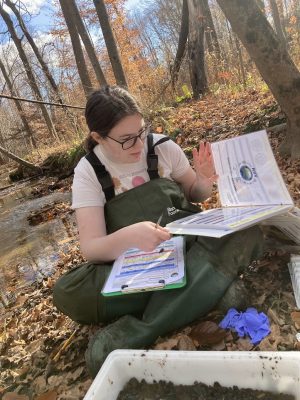
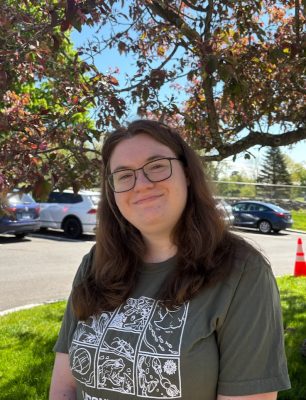
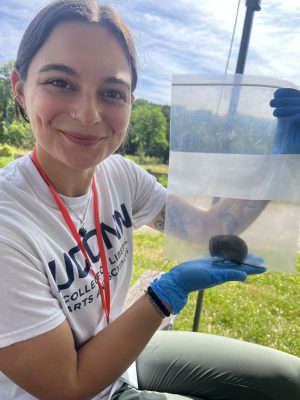
Sammy in highschool working on her CAP project.

As a rising Senior in high school, I participated in the Conservation Ambassadorship program with a wonderful DMM! It is actually the reason I went to UConn. This program was so important in shaping my choice to go into both ecological sciences and work with public outreach. I can’t wait to give my students the opportunity that was so influential to me.


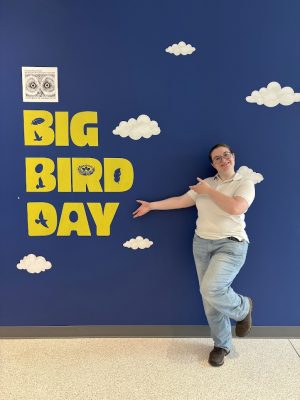
Sammy posing before helping with Connecticut State Museum of Natural History’s Big Bird Day.

Besides working as a DMM, I enjoy assisting in the Biodiversity Research Collection and the Connecticut State Museum of Natural History. I also am the Vice President of Tabletop Gaming Club on campus- every Friday night during the semester I partake in board games with lots of friends and strangers! Creating communities is a large passion of mine, whether it be for science or playing games after a long week of classes. 


When I’m not working on academics or extracurriculars, I enjoy cooking, playing video games with friends and cuddling my cat or my roommate’s cat.

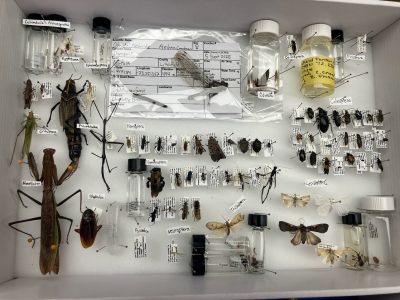
Sammy’s insect collection from her entomology course.
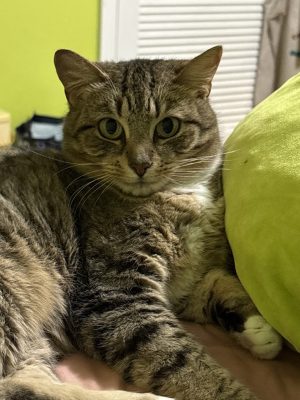
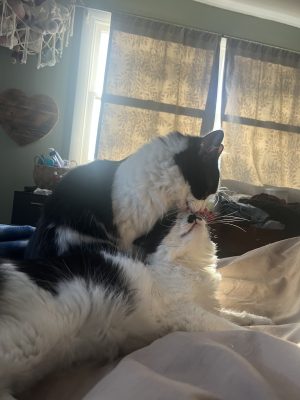
Sammy’s cat Charlie.


Meet Anna Hilary 2026-2027 DMM Mentor!

August 6, 2026

Hello everyone, my name is Anna! I am one of the Difference Maker Mentors for the 2026-2027 NRCA CAP Program. I am so excited to work with “Team Lions” and to see how they tackle challenges and celebrate wins throughout the 9 months we have together. 

This fall, I am going to be a rising senior studying Environmental Science and Resource Economics. Additionally, I have a minor in Urban and Community Studies! I have always been interested in the environment; especially when I was younger, I loved the science aspect of it all. I had chosen Environmental Science and Urban and Community Studies combo because I’m super interested in Environmental issues on a municipal/city scale. I added my Resource Economics major because I enjoy math and found that promoting environmental solutions, such as solar, can be more effective when including the economic benefits. 


As I’ve become more involved in the UCONN community and through my classes, I have found a love for community-based projects. This summer, alongside working as a Difference Maker Mentor, I’ve been interning for a nonprofit, Sustainable CT. Sustainable CT’s mission is “To foster inclusive, resilient, and vibrant Connecticut municipalities that provide opportunities for all to thrive.” With this work, I’ve been able to see a ton of municipality sustainability initiatives, some that are implemented by residents in the municipality! Additionally, on campus, I am the program director of a program called Give & Go. Give & Go is a week-long event at the end of the academic year where students can donate their unwanted dorm items, and those items are then donated to community partners across CT. 


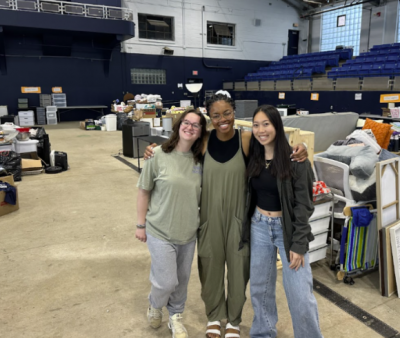
Photo of my friends a nd me during my first year of Give & Go (featuring some of the items collected during the event!)

When I saw the posting for the Difference Maker position, I knew that it would be a great role for me to combine my passion for community involvement and the environment. Before CAP, I hadn’t been in a mentorship position, so going into this, I knew I wanted to gain some project management skills through mentoring my students. Additionally, I wanted to learn some field-based skills, which I was able to get alongside my mentees during the field experience! 


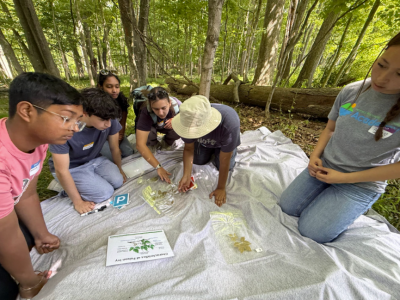
The Lions working together to identify poison ivy on their very first activity of camp


During the CAP field experience, I loved seeing “The Lions” show their passion for learning through the inquisitive questions they asked our key speakers and the active engagement in the activities. My favorite memory was seeing them all work together to identify and find macroinvertebrates during our water day.  I also really enjoyed watching them work together when finding the cache during our compassing and orientation activity. Specifically, one of my mentees has had previous experience using a compass with his Boy Scout troop, so it was amazing seeing him share his skills and interests with the team to help them learn and grow!


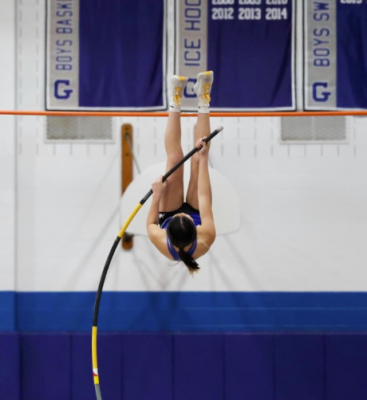
Me Pole Vaulting!

Outside of school and work, I like to stay active through hiking, pole vaulting, or just walking around with my friends. When I’m not outside, I am usually curled up in bed watching a TV show or movie (I just rewatched the Hunger Games series!).


Introducing Difference Maker Mentor: Juan Pineda

August 4, 2026


Hey! My name is Juan Pineda and I’m a Difference Maker Mentor for the 2026-2027 NRCA CAP Program. I’m a rising junior double majoring in Economics and Environmental Science with a concentration in Sustainable Systems.
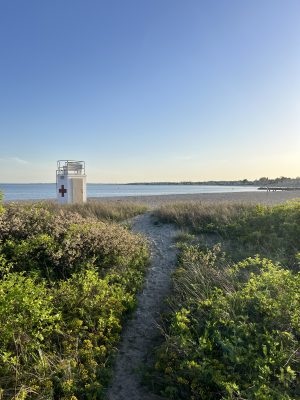
 

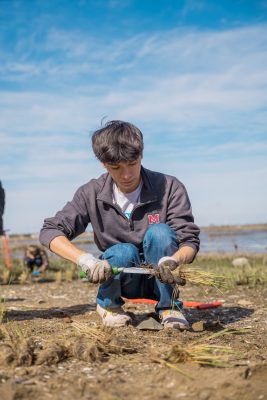
Since I was younger, I’ve cared about preserving outdoor spaces coming from a beach town along the Connecticut shoreline in Milford, right on the Long Island Sound. From beach runs to walking the boardwalk with my friends, the beach has a sincere significance to me. That value made me realize the challenges my hometown faces from flooding to clogged drains, I understand how fragile these spaces are. By taking care of our natural spaces, not only do we benefit but so does wildlife and  helping those who can’t stand up for themselves is incredibly important to me.

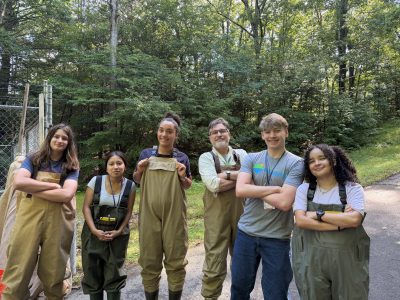
Here are the Polar Bears with Dr. Vokoun, our instructor for the day.


I carry this passion with me, so when I saw the opening for a Difference Maker Mentor role I was beyond excited. Being able to apply mentorship skills while helping students create a meaningful project that benefits their community is valuable because it’s an impact that draws me to this field. I can’t wait to see these students help their communities and not have to wait to make a difference so I’m happy to see how their projects turn out!


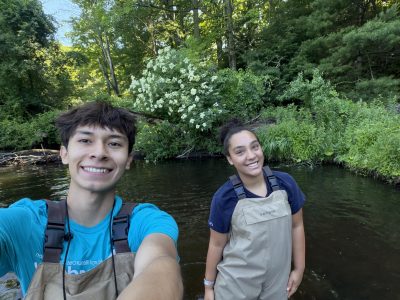
Juan and Sydney (one of my students) on Fisheries Day!

I’ve enjoyed working with my team, the “Polar Bears,” so far and learning about their passion and interests in making a difference. For example, some are interested in cleaning up polluted areas they have interacted with before. Others are interested in wildlife conservation and coastal flooding which are rising issues many face. My favorite memory during the CAP Field Experience week was Fisheries Day, where our teams walked around the Fenton River and caught a variety of fish. It was a beautiful day to spend outdoors, we even got to walk in the river and notice a lot about our surroundings.     


A favorite spot of mine in my hometown of Milford, CT.


During my free time, my hobbies include staying active and baking. My favorite dessert to make is chocolate chip banana bread. I also enjoy going to concerts and thrifting; my favorite concert of all time was seeing Clairo live in Boston with my friends. I love traveling too, whether that’s hiking trails or exploring new areas.


Introducing Difference Maker Mentor: Violet Andrews

July 21, 2026

Hi! My name’s Violet and I’m serving as a Difference Maker Mentor for the 2026-2027 NRCA CAP program. In the spring I graduated with dual degrees in Geology and Secondary Earth Science Education. In the fall I will continue my education at UConn, getting my Masters in Curriculum and Instruction.
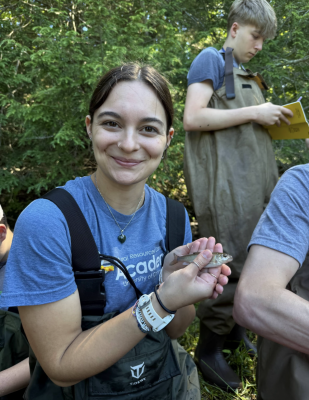
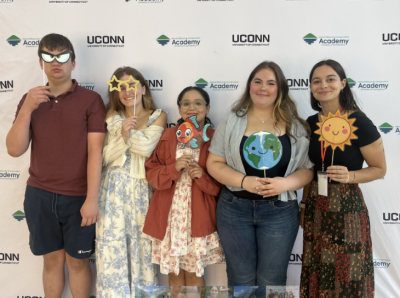
Violet on Fisheries Day during CAP field week.

I love the outdoors, when teaching I focus on incorporating nature and the environment into my curriculum. I am passionate about creating culturally sustaining pedagogy where all students’ views are represented and valued. Growing up, I always spent as much time outside as possible. Whether that was camping or hiking with my family or spending countless hours outside on my family farm.

I was introduced into the CAP program through interning last summer as an Environmental Justice Education Intern. I saw the huge impact that this program had on the students and mentors. Working with the students during their field week to see their finished projects in April was inspiring. I am excited to work with my “Red Surfing Otters” through the next 9 months. One of my most memorable moments with the Otters was when they persevered through the fire building competition. Although they did not get first place, they worked together to accomplish a steady fire! I am excited to see their perseverance continue as they begin their environmental action projects.

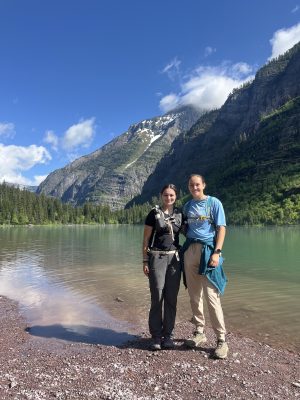
Violet and her friend Kristie at Glacier National Park.
Violet with the Red Surfing Otters!

When I am not in teaching or learning in the classroom you can find me traveling to national parks, spending time with my friends, or hanging out with my two cats. I love to cook at home or travel to try new foods. With my friends you’ll find us rock climbing, camping, hiking or at a concert.

Violet on Wildlife Day during CAP field week.
Violet’s two cats.
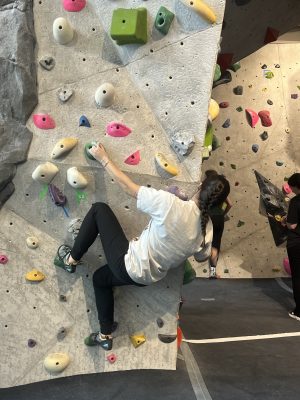
Violet rock climbing.

Eco-Digital Storyteller Mentor Reflection- Lily Walowitz

May 8, 2026

Wow, where do I even start? I can’t begin to explain the impact that the Eco-Digital Storytellers program has had on my life. I will never forget the first day that my fellow mentor Mary and I were preparing for our first class visit. I remember thinking to myself, “How am I going to get up in front of an entire class of students who are just two years younger than me?” “Are they going to take me seriously?” What I didn’t realize then was that just a few short months later, I would be walking out of GHAA for the last time, choked up, with tears in my eyes.

The progress I have seen in these students over the past few months has been extraordinary. Although they needed a little push at times, I can confidently say that every student took their initial ideas and turned them into truly amazing final products. The showcase couldn’t have gone better, and I felt so much pride for all of the groups who presented. I am also incredibly proud to share that the principal of GHAA, Maryam Wardak, was so inspired by the students’ work that she is providing them with the funding to carry out their projects. This achievement is a testament to their dedication and a powerful reflection of the school’s commitment to a greener future.


When I left GHAA that final time, I told the students that if they felt I had made an impact on them, they should know they impacted me ten times more. I have learned so much through being a mentor and I am proud to say that I have fostered such meaningful relationships with the students that I will cherish forever. As an aspiring teacher, this experience has also given me valuable tools that I will carry into my future classroom. This GHAA class will always be my first class, and I am so excited to see what the future holds for these students, as well as for their school, with the implementation of these environmental projects.

I want to give a special thank you to my absolutely wonderful co-mentor, Mary. The car rides to Hartford were some of the most special moments, and I am so grateful for the time we shared. Thank you for being my big sister at UConn and I am so excited to watch you continue changing the world after graduation. I would also like to thank Laurel and Laura for giving me the opportunity to be part of this incredible program. Thank you for believing in me and for your unwavering support throughout the semester. Expect lots of visits from me next year!


This program is so incredibly special, and I am eager to see what lies ahead for EDS. We all have the power to create change, and this program truly demonstrates that by building a bridge between budding ideas and real world application. It reminds us that change doesn’t have to start big, it begins with people who are willing to care, to try, and to take that first step. Through this program, we see that every idea has potential, and every person has the ability to make a difference.

Reflecting on Being an EDS Mentor – Mary Ferguson

May 6, 2026

Long time, no see! Once again, my name is Mary Ferguson, and I am about to graduate with my Bachelor’s of Science in Earth Sciences with a minor in Women’s, Gender, and Sexuality studies! This past semester I had the distinct honor of being an Eco Digital Storytelling Mentor within the Natural Resources Conservation Academy.


Throughout these past 14 weeks I worked closely with the students from the Greater Hartford Academy of the Arts (GHAA) and mentored them through a project very similar to what I created for the Environmental Storytelling Course I took last fall. This experience taught me so much about myself and I think it’s fundamentally changed my future career path.  


Getting to interact with these students illuminated the love I have for being in the classroom. Before this experience, I was very unsure if I would get a master’s degree. I figured like most professionals in my field, I’d work for a few years then pursue a master’s in something related to my job so my employer would cover part of the tuition. I liked how simple and safe this plan was. However, since getting the opportunity to be in the classroom and interact with these amazing young adults, I don’t know if the easy, safe choice is what I want anymore. I found a new type of joy in the classroom, with those kids. Now, I’m considering getting my master’s degree for teaching in the next few years, something I never thought I’d be interested in.  


Not to get too philosophical, but I do think I’ve figured out the meaning of life, really. Stick with me here. I will acknowledge that my belief system is very heavily influenced by the society in which I was raised, but I think it holds true for many people. In my mind, the meaning of life is to chase experiences that make you feel alive. Those interactions, feelings, and whatever else makes you think, unprompted, ‘I am so glad to be alive’. It may seem overly simplistic, but I’ve been chasing that feeling my whole life, and don’t intend to stop.  


Getting to mentor these kids, getting to see them grow, their confidence in themselves and their abilities flourish, I got that same feeling. I felt like I was making an impact, that what I was doing really mattered. Without even realizing it, I found myself jumping at any opportunity to be in the classroom with these kids. It made me feel alive.  


After I graduate, I have a job in environmental engineering lined up, though I have a sneaking suspicion that a Master’s of Teaching will be in my future. Until next time, chase what makes you feel alive. You won’t regret it.  

Introducing EDS Mentor: Mary Ferguson

February 18, 2026

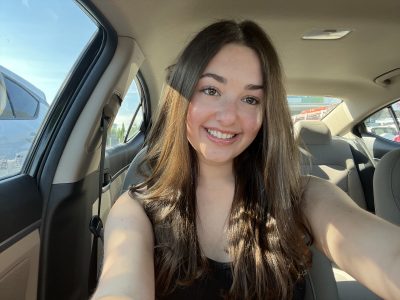
Hi y’all! My name is Mary Ferguson, and I am so honored to be one of the 2026 Eco Digital Storytelling Mentors within the Natural Resources Conservation Academy. I’m a senior studying Earth science with a minor in Women’s, Gender, and Sexuality Studies.  


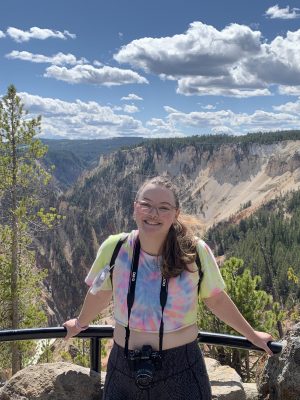
A girl with a tie-dye crop top and black leggings stands facing the camera with her back to Yellowstone's Grand Canyon
When I worked in Yellowstone I enjoyed going to the canyon often.

I’ve always had a passion for science, but when coming to UConn, I had no idea what to major in. After an introductory Earth science course, I was hooked.  Something I found truly fascinating about that course was how infectious the instructor’s excitement was. I’ve been chasing that feeling, and the ability to create that feeling in others, since then.   


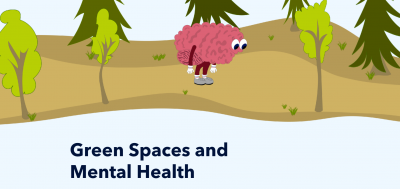
This passion brought me to the Environmental Storytelling course last fall, where I got to practice my skills in ArcGIS Storymaps. I decided to create a project surrounding how time in/out of green spaces can impact mental health. This is an incredibly important topic for me, as I am a runner and I got injured over the summer. Because of my injury, I wasn’t able to spend much time outside, and I noticed a decline in my mental health because of it. Being able to discuss this topic in a meaningful way was an experience I’m incredibly grateful for. 


A cartoon-ish drawing of a brain surrounded by trees. Text reads "Green Spaces and Mental Health"
This is an image from my final project for the Environmental Storytelling course, “Green Spaces and Mental Health”

When sharing our (nearly) finished projects with high school students, I found myself having the same feeling I have been chasing my entire college career. Seeing the students get excited about the topic and the science behind it brought me a sense of fulfillment that I hope to bring into a career in science communications.   


Currently, I’m finishing up my last semester of my bachelor’s degree and loving every second of it. In my spare time I’m reading lots of fantasy books and training for my first half marathon.


Eco-Digital Storytellers Mentor Reflection: Jamaile Hall

February 10, 2026

Hello! My name is Jamaile, and this marks my third and final time serving as an Eco-Digital Storytellers mentor, and what an incredible journey it has been! While it’s truly a bittersweet moment to say goodbye to this remarkable program, the students, and the faculty, I leave with immense gratitude. As someone involved from the very first undergraduate course and mentor position, I’ve had the honor of not just participating, but of witnessing our program grow and flourish, adapting to become even more impactful.


This role has been transformative for me. I stepped into it with shyness and hesitation, but thanks to the unwavering support of the staff at the NRCA, I found my voice. This experience has been the crucible for developing my presentation, of the community that engage in civic action and legislation. Additionally, I communication, and leadership skills while empowering high school students to engage deeply with community issues.
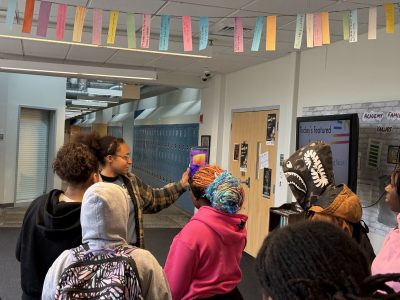
 

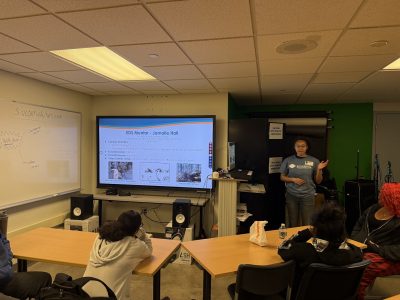
This fall semester, in particular, has been one of my absolute favorites! I guided students in using technical tools, such as thermal imaging cameras and air quality monitors to collect environmental data and translate those findings into compelling narratives. We explored the spectrum of civic action from local campaigns to legislative advocacy and bridged the gap between the classroom and the real world by connecting them to active members brainstormed with them how to potentially utilize animation to communicate processes like the urban heat island effect or a redesign of a public space that can coincide with their stories!


Seeing the students’ creativity flourish has been incredibly rewarding, and they are well-prepared for their spring exhibition. This program also holds a special place in my heart for being a space where my Ecology and Digital Media & Design major blend together to help create these digital projects. And I couldn’t be more proud of the direction the current projects are going. As I close this chapter, I carry with me not just incredible memories, but the confidence and skills I gained here. I am immensely proud of the NRCA community and the brilliant work being done and I hope it continues for a long time.  


Introducing EDS Mentor: Lily Walowitz

January 27, 2026

Hi! My name is Lily Walowitz and I joined the Natural Resources Conservation Academy as an Eco-Digital Storytellers Mentor for the 2026 program. I am currently a sophomore at UConn pursuing a Secondary Earth Science Education Degree.  


Since I was in kindergarten, I have known that I wanted to be a teacher, but the question was always: what should I teach? It wasn’t until I took a high school environmental science class that I realized that I am extremely passionate about the environment, and I want to share that passion with others.  


Picture I took while kayaking in the Pocono Mountains


UConn has allowed me to channel my passion into amazing projects that I am so honored to be a part of. I am proud to be an ambassador for UConn’s Clean Air Quality Initiative in which I help to create lesson plans for students K through 12 focused on DIY air purifier construction. I am also currently in the process of producing teacher explainer videos to instruct teachers on how to assist students in learning about air quality.  


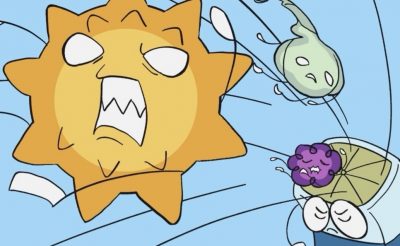
Through the 2025 fall Environmental Storytelling course, I decided to use my background in indoor air quality to create a kid-friendly animation about the dangers of indoor air pollution. I landed on this idea because while doing research for elementary lesson plans, there were no informational videos about indoor air pollution for elementary aged children. Along with this animation, my group and I produced an activity book to further reinforce the ideas seen in the animation. Being able to create such amazing forms of media and sharing them with the public has been one of the most rewarding things I have ever done. I hope to inspire others with my project and help high school students develop their own projects that they are passionate about. 


Pollution Monsters Animation

In my free time, I love participating in volunteer initiatives that allow me to give back to the community. I am involved with 4H in Vernon at UConn which is an organization where undergraduates travel to schools in Vernon and assist students in STEM activities and projects. I also love going to the beach and being in the ocean, taking pictures of nature, as well as spending time with family and friends.


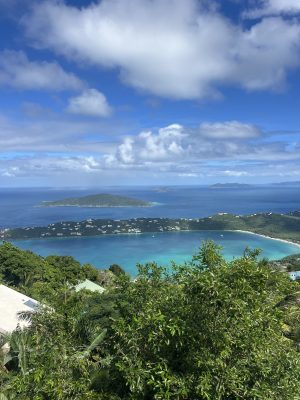
Picture I took in St. Thomas, USVI

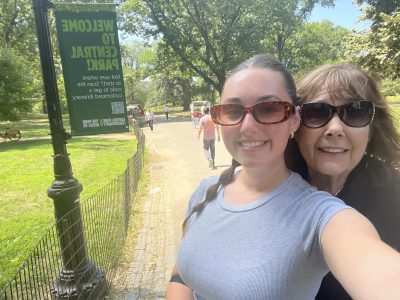
Me at Central Park with my Grandma

Eco-Digital Storytellers Mentor Reflection: Amber Hwang

January 16, 2026

Meeting students for the first time at Workshop 1

Wading into my Environmental Storytelling class in the fall of 2024, I never imagined how this program would rearrange the stars as I wayfind the environmental space. When the waters ahead are uncertain, working with high school students at the Greater Hartford Academy of the Arts (GHAA) through Natural Resource Conservation Academy’s (NRCA) Eco-Digital Storytellers (EDS) inspired joy and hope for our collective environmental future. This experience guiding students as they told community-centered environmental stories using geospatial technology and digital media helped me see the power of radical imagination and creative storytelling in opening pathways for environmental justice.


Students exploring air quality sensor data on a map during a GHAA visit

At the first class visit of fall 2025, students collected temperature, air quality, noise, and biodiversity data using our Urban Forestry Toolkit and Survey123 to map the impact of urban trees on ArcGIS Online. This visit exploring the surroundings of their school showed me the possibilities in returning the classroom to nature and empowering communities to gather their own data for environmental stories.


A highlight of the fall was inviting community partners, Sydney from CT Roundtable on Climate and Jobs and Madison from CT Zero Waste Coalition, to visit the classes. After listening to them share their communications and community organizing work, students had the opportunity to practice mock interviews with the digital media techniques they learned. Moved and energized by the climate leaders’ passion and journeys shaping environmental justice futures, we carried that inspiration into students’ own projects as they began workshopping ideas for their concept pitches. 


Jamaile and I each sharing the evolution of our projects, including map and film script revisions

As GHAA teachers brought together digital media and environmental science classes to mirror UConn’s interdisciplinary undergraduate course for the new school year, I am grateful to have had the opportunity to contribute to community partners working more closely with students in the fall. Reflecting on last spring, I remember learning from conversations about placemaking and murals with RiseUP for Arts and listening to stories about food justice when EDS mentors visited Keney Park Sustainability Project. From workshops on the UConn campus to class visits in Hartford, it has been such a gift to learn from the students, listen to their stories, and hold space for their ideas. 


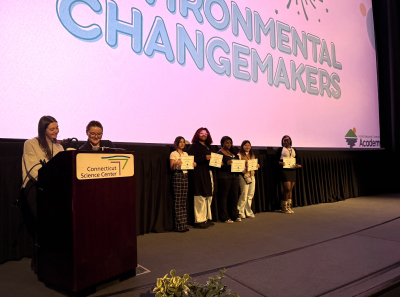
EDS & DDM mentors with the NRCA team at Environmental Changemakers Showcase at the Connecticut Science Center

After many months of crafting their multimedia storytelling projects on StoryMaps, seeing the students share their work at the Environmental Changemakers showcase in April was a proud moment for us all. We also had the chance to interact with posters by Conservation Ambassadors Program students under Difference Maker Mentors (DMM), another impactful NRCA program engaging historically underrepresented youth in environmental action, and hear from panelists who helped us see how environmental action and digital media storytelling fields can be inclusive and intersectional.


Students learning Adobe After Effects at our workshop’s Animation Tech Station

Beyond the digital storytelling skills and environmental justice wisdom this program has sown, EDS has illuminated more paths in my career and life. As I study humanity’s diverse relations and imaginings of the environment through Environmental Studies and English and learn how to visualize and analyze geographic data with maps through Geographic Information Science, in EDS I found a collaborative space where my interests and these disciplines I study uniquely meet. This program’s innovative nature and culturally sustaining pedagogy is truly a paradigm shift embodying the kind of creativity within environmental justice in technology that sparks the courage and solutions the world needs in this era. 


Environmental Storytelling class

Braiding science exploration with storytelling education, EDS has been a community that illuminates the wonders of our world to not only envision, but to co-create regenerative futures. This has been one of the most inspiring experiences of my time at UConn and I will carry it with me always. A special thank you to Laura, Laurel, and Nicole for their thoughtful mentorship, trusting me with this role and helping me grow. Thank you to my fellow fall mentor Jamaile and my spring mentoring cohort for being incredible individuals to have crossed paths and worked with. I am excited for how this program continues to grow, teaching us the art of possibility and reminding us that the stories within our communities can be the maps that help us find our way.