Web cookies (also called HTTP cookies, browser cookies, or simply cookies) are small pieces of data that websites store on your device (computer, phone, etc.) through your web browser. They are used to remember information about you and your interactions with the site.
Purpose of Cookies:
Session Management:
Keeping you logged in
Remembering items in a shopping cart
Saving language or theme preferences
Personalization:
Tailoring content or ads based on your previous activity
Tracking & Analytics:
Monitoring browsing behavior for analytics or marketing purposes
Types of Cookies:
Session Cookies:
Temporary; deleted when you close your browser
Used for things like keeping you logged in during a single session
Persistent Cookies:
Stored on your device until they expire or are manually deleted
Used for remembering login credentials, settings, etc.
First-Party Cookies:
Set by the website you're visiting directly
Third-Party Cookies:
Set by other domains (usually advertisers) embedded in the website
Commonly used for tracking across multiple sites
Authentication cookies are a special type of web cookie used to identify and verify a user after they log in to a website or web application.
What They Do:
Once you log in to a site, the server creates an authentication cookie and sends it to your browser. This cookie:
Proves to the website that you're logged in
Prevents you from having to log in again on every page you visit
Can persist across sessions if you select "Remember me"
What's Inside an Authentication Cookie?
Typically, it contains:
A unique session ID (not your actual password)
Optional metadata (e.g., expiration time, security flags)
Analytics cookies are cookies used to collect data about how visitors interact with a website. Their primary purpose is to help website owners understand and improve user experience by analyzing things like:
How users navigate the site
Which pages are most/least visited
How long users stay on each page
What device, browser, or location the user is from
What They Track:
Some examples of data analytics cookies may collect:
Page views and time spent on pages
Click paths (how users move from page to page)
Bounce rate (users who leave without interacting)
User demographics (location, language, device)
Referring websites (how users arrived at the site)
Here’s how you can disable cookies in common browsers:
1. Google Chrome
Open Chrome and click the three vertical dots in the top-right corner.
Go to Settings > Privacy and security > Cookies and other site data.
Choose your preferred option:
Block all cookies (not recommended, can break most websites).
Block third-party cookies (can block ads and tracking cookies).
2. Mozilla Firefox
Open Firefox and click the three horizontal lines in the top-right corner.
Go to Settings > Privacy & Security.
Under the Enhanced Tracking Protection section, choose Strict to block most cookies or Custom to manually choose which cookies to block.
3. Safari
Open Safari and click Safari in the top-left corner of the screen.
Go to Preferences > Privacy.
Check Block all cookies to stop all cookies, or select options to block third-party cookies.
4. Microsoft Edge
Open Edge and click the three horizontal dots in the top-right corner.
Go to Settings > Privacy, search, and services > Cookies and site permissions.
Select your cookie settings from there, including blocking all cookies or blocking third-party cookies.
5. On Mobile (iOS/Android)
For Safari on iOS: Go to Settings > Safari > Privacy & Security > Block All Cookies.
For Chrome on Android: Open the app, tap the three dots, go to Settings > Privacy and security > Cookies.
Be Aware:
Disabling cookies can make your online experience more difficult. Some websites may not load properly, or you may be logged out frequently. Also, certain features may not work as expected.
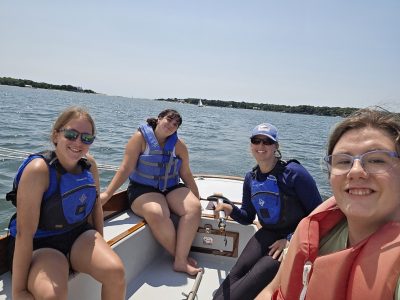
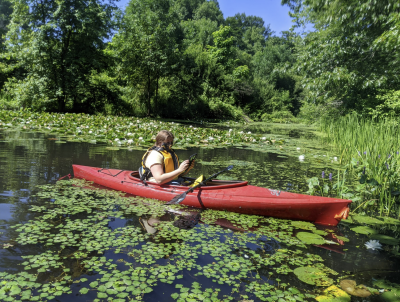
Haley (right, red life jacket) goes sailing for the first time
Hi! My name is Haley Jordan (she/her) and I’m a Difference Maker Mentor for the 2025-2026 CAP Program! I’m going into my junior year as a natural resources major concentrating in fisheries and wildlife, with a minor in ecology and evolutionary biology!
Haley in high school working to map invasive water chestnut
In high school, my wildlife biology teacher connected me with the NRCA in the form of the now-retired CTP program (https://nrca.uconn.edu/ctp/). She partnered with me to make a project removing European Water Chestnut from a pond in my city, sparking my interest in invasive plants, environmental management, and how to use technology to track environmental data (see the StoryMap on our project here). The project was a bright spot in a bleak time period; it was 2020-2021, and I was attending classes online.
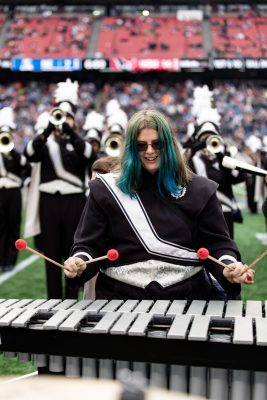
Performing with the UConn Marching Band
Now, here at UConn, I am always learning and growing. Whether that’s picking up a new instrument, taking a difficult class, or just trying something new, I’m always up for an adventure. I found out in the spring that I love rock climbing!
I don’t know what my end goal is for my career and education, and that’s okay. Right now, my goal is to be a park ranger or guide, but who knows where the future will take me. My plan is to focus on enjoying my college experience until then.
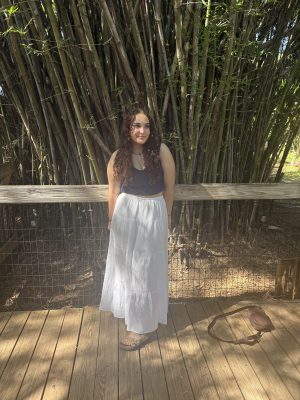
Photo taken at the Brevard Zoo and Conservation Hub
Hello!
My name is Rachel Palmer, andI’msuper excited to be working as a Difference Maker Mentor for the 2025-2026 NRCA Conservation Ambassador Program (CAP). I was born and raised in central Maine. I am entering my junior year this fall, majoring in Natural Resources with a minor in Environmental Health and Safety.
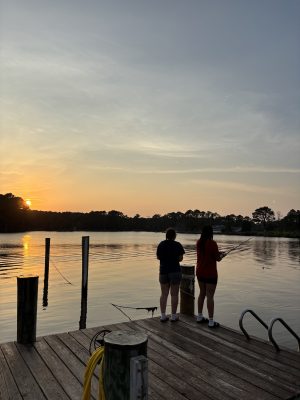
Fishing in Maryland
I am passionate about both education and the environment. Growing upin a rural area,Ispent most of my time outside.My childhood wasdefined bythe changing seasons,especiallythe harsh New England winters.Around2020, I started to notice that the winter weather I had grown up with was changing; the mountains of snow that once covered my town had been replaced by freezing rain and abnormally warm temperatures. This moment sparked my interest in environmental science, leading me to devote my future to bettering this planet.
After graduating,I plan to attendeithergraduate schoolor veterinary school.My ultimate career goal is to work for a federalagency infisheriesandwildlifeconservationormanagement.Laterin my career, Ihope to returnto schoolto earnadegree ineducation in ordertoteach highschool biology.Through both research and teaching, I aspire to make a meaningfuldifference:mentoringthenext generation of environmental leadersandcontributing to theprotection ofourplanet.
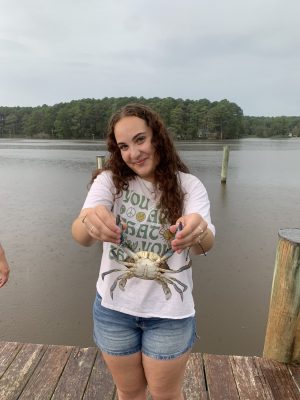
Chesapeake blue crab
This summer, I had the opportunity to volunteer at the Craig Brook National Fish Hatchery inmy home state.The hatcheryhelpsconservethe lastremainingnatural populations of Atlantic salmon in theUS.During mytime volunteering,I collectedblood and tissue samples from the fish to keep track of the remaining endangered species out in the wild.
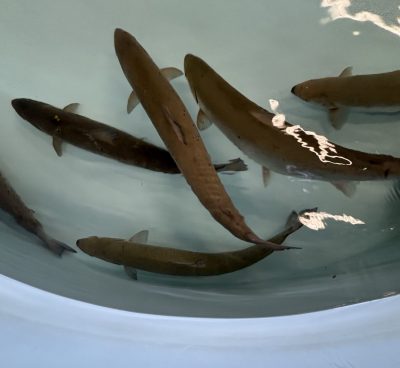
Hatchery-raised Atlantic salmon
Through this experience, I was able to learn more about making a difference through conservation, the federal employment system, and the techniques of aquaculture.
In the summer, I stay busycoaching high school lacrosse, teaching swim lessons to individuals of all ages, andtaking trips to the beach.On campus, Iteach undergraduate and graduate swim lessons at the UConn Recreation Center and volunteer with the Red Cross Club. Outside of academics,I enjoy hiking, making jewelry, playing sports, reading, and going to concerts. My favorite concert I have attended is Taylor Swift’sEras Tour!
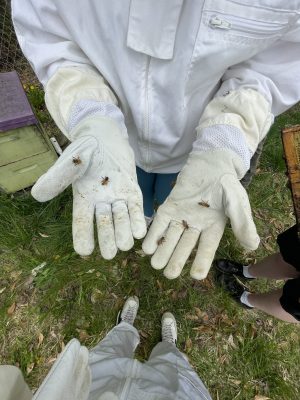
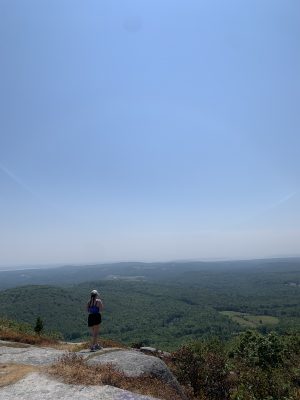
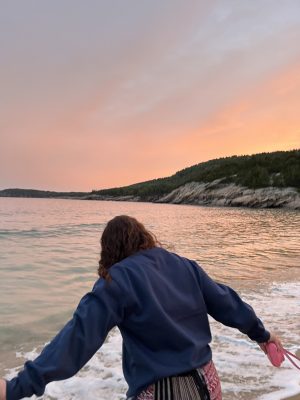
Handling honey bees using beekeeping glovesSummit of Mount Waldo, Frankfort, MESand Beach at Acadia National Park
My name is Shanelle Thevarajah and I am a second year Ph.D. student at the University of Connecticut, and the Graduate Mentor for the NRCA Conservation Ambassador Program.
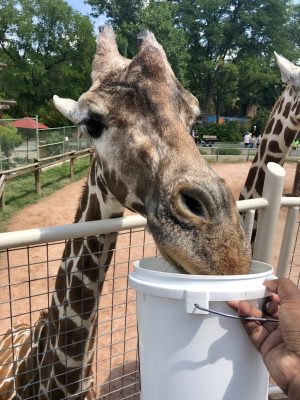
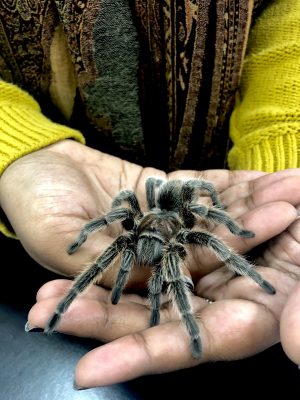
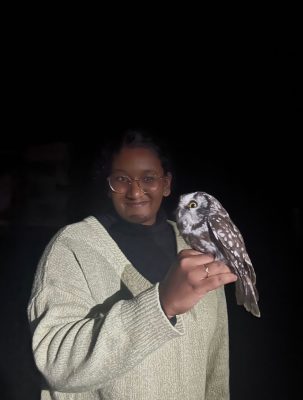
I graduated with a Bachelor of Arts and Science from the University of Guelph in 2019 with a focus on Zoology and Family/Child Studies. During this time, I realized how much I love the intersection between science and communities, which motivates me to bring both together as much as I can. I worked two seasonal positions at Denver Zoo while completing my undergraduate degree and love science communication. In these roles, I developed activities relating to wildlife conservation, narrated penguin and giraffe feedings, and worked with the teen volunteer program. I love the natural world and have worked/volunteered in a lot of positions where I handled critters – large, small, slithery, crawly… you name it!
Shanelle feeding a giraffe their daily vitamins.Shanelle handling a tarantula for an invertebrate course lab.Shanelle handling a Boreal owl that was trapped in a mist net.
From there, I completed my M.S. in Environmental Biology from Regis University in 2021, where my thesis focused on the social behavior of male Asian elephants. I love working in the environmental field and getting others involved in science – in whatever way works best for them.
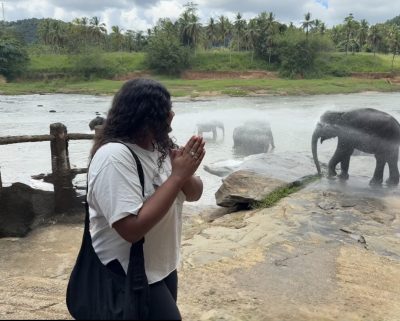
Shanelle with a herd of Asian elephants in Sri Lanka.
After graduating, I worked for a non-profit in Colorado where I managed internships in partnership with the National Park Service (NPS). These positions were created to build pathways for underrepresented young adults in the conservation field. I acted as a point of contact for interns and park supervisors throughout their programs, while offering training and resources for the intern during their time with us.
Through this position, I traveled to several parks and worked with some amazing interns across the United States. Some of my favorite parks include Saguaro National Park, North Cascades National Park, and Glacier National Park. I managed a fishing and birding program, so I learned how to fly fish and think fish are a super underrated animal. This position inspired me and sparked my interest in mentoring. It’s especially rewarding to see that some of the interns I once supported are still working with the NPS today!
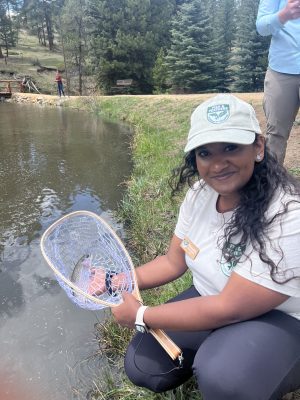
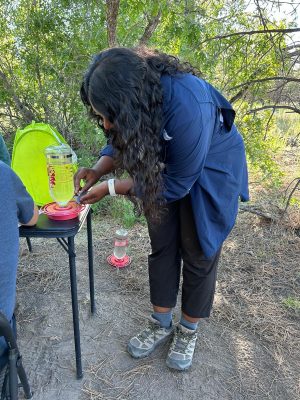
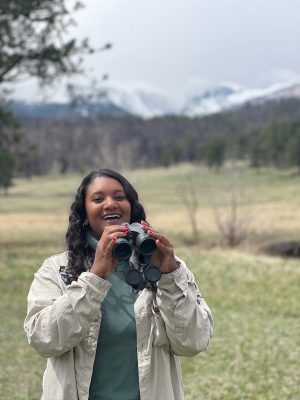
Shanelle after catching a rainbow trout in Estes Park.Shanelle feeding a hummingbird at Bandelier National Monument.Shanelle birding at Rocky Mountain National Park.
Shanelle after finding a hidden waterfall!
I began my Ph.D. journey at UConn in June 2024 and have already had the joy of mentoring one cohort of CAP students. I’m excited to continue that work with this year’s group! My research explores what drives and discourages people from pursuing careers in the environmental field, with an additional focus on how mentorship can support the recruitment and retention of historically underrepresented students.
Alongside my research, I’ve developed and led water justice lessons for several high school programs, including Upward Bound and NRCA CAP. I love seeing students connect their own experiences to big questions about equity, environment, and their communities.
Shanelle’s last mentee group during 2024-2025, the Falcons!Shanelle’s mentee group for 2025-2026 CAP, the Mighty Mice.
In my free time, I love to spend time with my dog (Oswald/Ozzy), cook/bake, and explore new places. I am always down for an adventure and to see what the northeast has to offer! I can’t wait to continue my time at UConn and support more CAP students as they carry out projects that will benefit their communities.
Hello! My name is Violet Andrews, and I am thrilled to be joining the Natural Resource Conservation Academy for the summer of 2025. I am a Senior pursuing a dual degree in Earth Science Education and Earth Science. I am motivated through my love for nature, the outdoors, and providing everyone with an education focused on the environment.
Growing up, I have always felt a strong connection to the outdoors. From exploring the woods and stream behind my childhood home or traveling with my family in our Volkswagen Bus jumping from campground to campground. Through my time in college my connection to nature has only grown. Also, through my education, I have seen the unfair educational disparities placed on communities. The educational gap was so obvious yet going unnoticed by policy makers. This same pattern occurs in situations involving the environment. As I learned more, I saw many environmental burdens placed on the same communities affected most by education inequities.
Working at my family’s farm in 2008
I have now begun focusing on learning more about the disparities that are the results of policies, practices, and history that must be challenged and changed. I wanted to become an Environmental Justice Education Intern, not only to expand my teaching on the outdoors, but also to learn ways I can use science, communication, and community work to shine a light on environmental issues that often go unnoticed.
Winter 2025, I traveled to Taiwan to study geology. During my time there I focused on creating lesson plans that I could bring back into my classrooms to provide my students with a global perspective. While studying there, I learned about the inequities in education that students also faced. I discussed the ways in which they combat this and expanded my learning with the goal of bringing my knowledge back into my future classrooms. Spending most of my time there outside, I continued to dream of becoming an outdoor educator.
Presenting in Taiwan on the importance of multicultural education
This Environmental Justice Education internship with NRCA is going to be my first opportunity to really experience this. I’ll be supporting PhD student Shanelle Thevarajah in developing a water justice curriculum, engaging with Upward Bound students, and deepening my understanding of environmental justice.
Backpacking in the Grand Canyon
When I am not in the classroom, you will likely find me traveling. Where I am hiking, camping, or reading a book. When I am home, I often go to as many concerts that can fit in with my schedule as possible. Or hanging with my two cats.
Hello! My name is Amber Hwang, and I joined the Natural Resources Conservation Academy as an Eco-Digital Storytellers Mentor. As a sophomore pursuing a dual degree in Environmental Studies and English with a minor in Geographic Information Science, I am guided by the narratives of place and justice that thread through our environment.
My experiences in Taiwan, beyond enriching my understanding of the intersectionality of environmental justice as marginalized communities face disproportionate impacts of climate change, helped me recognize how our identities and lived experiences are essential to environmental solutions. When teaching English at an elementary school in rural Taiwan, I had the opportunity to blend the Sustainable Development Goals into lessons, hoping to spark an early awareness of environmental and social justice topics. Sweeping through Taiwan that summer, Typhoon Gaemi revealed the social inequities that disasters bring to light alongside the urgent need for equitable education in underserved communities.
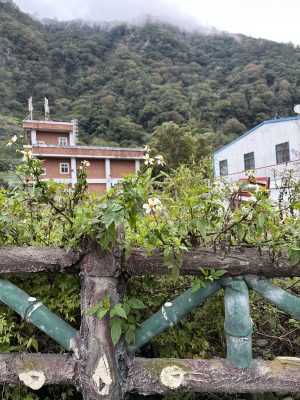
Lidao Village, land of the Bunun Indigenous community
Learning about the deeply rooted culture and history of the Indigenous peoples in Taiwan during my time there as well as how their communities are most adversely affected by disasters has inspired an interest in Indigenous geographies and environmental justice in climate resilience. Professor Lamiña’s Indigenous Geographies in Abya Yala and Turtle Island class that I am currently taking has been eye-opening in encouraging critical thinking about how unraveling colonial cartographic construction and narratives is a way for us to build. From stories and spatialities to environmental policy and law, my interests carry an overarching belief in re-narrativizing climate stories, illuminating diverse voices in the environmental movement rather than reproducing historical silences and erasures.
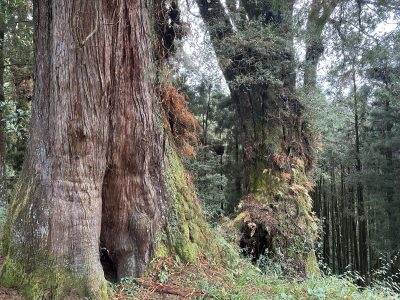
Hiking among Formosan red cypress
Through the fall Environmental Storytelling course, I have found a new interest in StoryMaps and exploring the relations between maps and storytelling, as we collaborated on projects using geospatial technology and digital media to radically imagine an inclusive environmental future. From Indigenous spatial art, I have learned that maps do not need to be perfect representations of reality but can be poems, songs, and storytelling. Other than learning at the convergence of the environmental humanities and environmental justice, I enjoy skiing, writing poetry, creating art, and volunteering at UConn’s Spring Valley Student Farm.
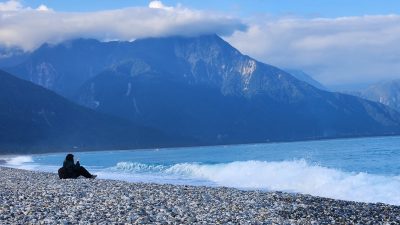
Where the mountains meet the sea at Qixingtan Beach
Centering diversity and inclusion in my involvement in UNICEF Campus Initiative, Ecoposium, Asian/Asian American Mentoring Program, and now Eco-Digital Storytellers, I hope to show students from underrepresented backgrounds that they belong in the environmental space and see themselves as changemakers in their communities. I am immensely grateful for this opportunity to grow as a climate storyteller and am excited to continue supporting high school students in Hartford with their environmental storytelling projects at the intersection of my passions for the art of storytelling, the geospatial, and environmental justice.
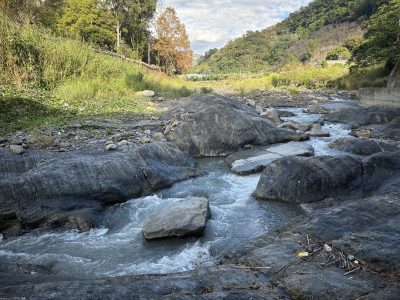
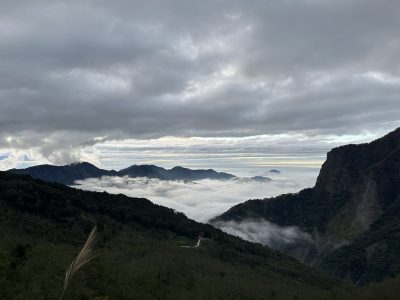
Slate outcrops near Puli (from UConn x NTU field study in Taiwan)Alishan MountainsRice fields in Meinong
NRCA’s Eco-Digital Storytellers is funded by a grant from the National Science Foundation Innovative Technology Experiences for Students and Teachers program. The material on this webpage is based upon work supported by the National Science Foundation under Grant No. 2148606. Any opinions, findings, and conclusions or recommendations expressed in this material are those of the author(s) and do not necessarily reflect the views of the National Science Foundation.
My name is Tamara Parks, and I am currently serving as a Difference Maker Mentor for the 2024-2025 NRCA Conservation Ambassador Program. I am a first-generation undergraduate student from New Haven, CT, completing my second year at UConn and exploring my course of study through the ACES program (so, I am undecided :D)!
A fun fact about me is that I took a gap year before entering college. I had a lot of support in raising money with my community, and I spent a month in Costa Rica with EF Gap Year in their Sustainable Development Program. My cohort and I completed service-learning projects with several organizations around the Costa Rican Pacific Divide.
Tamara helping to relocate a sea turtle nest with Osa Conservation in Costa Rica.Tamara standing in front of a propagule nursery, before planting 200 of them in an effort to restore the mangroves on an island.Tamara volunteering at Lifting Hands (a non-profit in Costa Rica) during her gap year.
Throughout my high school career, I had the opportunity to engage in anti-racist and anti-bias trainings where I channeled my energy to address culturally relevant pedagogy gaps in my classroom. Being an NRCA Difference Maker Mentor allows me to amplify the voices of students from marginalized communities as they engage in their own culturally relevant environmental initiatives. I have enjoyed getting to know each of my mentees on a personal level, and I’ve enjoyed witnessing how they combined their interests with a community need.
Tamara leading Forestry Day during the 2024 CAP Field Experience.
During my first year at UConn, I had the opportunity to participate in the Student Health and Wellness (SHaW) Innovate Wellness Challenge. My partner, Sugita Mahendarkar, and I won this challenge with the proposal for The Green Garden project. I now spend some of my time at UConn working to establish the garden as a known student space, making it accessible through social events, club meetings, and volunteering days.
Tamara (left) & Sugita (right) pitching The Green Garden for the spring 2024 Innovate Wellness Challenge.
In addition to my work with The Green Garden and NRCA CAP, I am a UConn All-Star! All-Stars is a step and dance team here at UConn. I enjoy bonding with my teammates and cracking jokes as we learn new steps during practice. And, although you’ll see us giving a lot of attitude on stage, performing and competing always brings us closer.
Team photo of Tamara and the UConn All-Star Step and Dance Team.UConn All-Star Wildin’ Out performance at Williams College.
The Kat-Tastic Six (Tamara and her mentee team) completing Water Day during the 2024 CAP field experience.
Beyond these extracurriculars, I like to paint with friends, rewatch Entergalatic on Netflix, hike, design websites, and try out new coffee shops. I look forward to seeing the accumulation of every mentee’s hard work at our conference this April and can’t wait to celebrate alongside friends and family.
Hello everyone! My name is Nicole Zollino, and I’m one of the newest Eco-Digital Storyteller Mentors for the 2024-2025 NRCA program. I’m currently a senior at UConn, pursuing a BFA in Digital Media & Design with a concentration in 3D Animation. Helping others bring their creative projects to life is something I like to do, and my experience in the Environmental Storytelling course inspired me to take on this mentorship role.
Overall, my main strengths are digital animation and illustration. I’ve been drawing since I was a toddler, and my early love for both classic and modern cartoons sparked a strong interest in animation. I began experimenting with animation during my teen years, and my skills have continued to grow throughout my time at UConn. Because it’s something I’m truly passionate about, I also love watching animated projects created by others, especially those by fellow students!
Most of my experience with the NRCA has been through the aforementioned course. I found it really interesting to learn how to use unique digital media, such as the StoryMaps, to tell meaningful narratives for important causes. Through the class, I learned a lot about environmental issues affecting UConn, such as the pollution of Mirror Lake, which really concerned me. This inspired me to become more invested in helping the high school students address the issues negatively impacting their own school communities.
Outside of school and work, my hobbies include biking, editing Wikipedia, playing video games, and listening to music.
Hello! My name is Ben Reynolds (They/Them), and I’m an Eco-Digital Storyteller Mentor for the 2024-2025 NRCA program. I’m a junior year Digital Media & Design (Film Concentration) major and Sociology minor here at UConn. My main works include screenwriting, a few short films, and several originally written stage plays!
Helping others achieve their artistic goals has always been a big passion of mine, so I am incredibly honored to be a part of the NRCA program, helping guide these students through their environmental storytelling projects! I have previously worked in several community theater groups that focused on giving kids an opportunity to perform and express themselves. Getting an opportunity to do this again while also seeing these students make real changes within their community has been such an exciting and rewarding experience!
Myself and the rest of the Curtains: The Musical production team!
Beyond my work here and in class, I am currently the President of Page to Stage Productions, a local theater group here on UConn campus (Find us on Instagram: @uconnpagetostage). If you are ever looking for a place to escape, feel free to come see one of our shows! I also enjoy writing, reading, film, and gaming, and my biggest passion is D&D, which I have been addicted to for almost 10 years now. The culmination of my years of theater and D&D was a show I directed and Game Mastered last year called Dungeons & Tuskies: A D&D Live Show! My current major project is an originally written stage-play called “The Saloon”. Look out for performances in the Student Union theater on March 29th & 30th!
My performance as the “Game Master” of D&T!
I am incredibly honored to be a member of this program, and I’m so excited to see these students’ dreams and ideas come to life! I know that I will carry the experiences of my time here on campus and in this position with me for the rest of my career!
Hi! My name is Parker, and I’m a junior at UCONN. I am passionate about community building, student support, and creating engaging activities. I love working with students in a variety of contexts such as mentoring, event coordination, and one-on-one conversations.
Aside from being an EDS mentor, I work as a Resident Assistant on campus where I do my best to foster a sense of belonging and community among my peers. Additionally, I founded the Casual Sports and Games Group on campus, creating a welcoming space for students to connect and stay active without the pressure of formal competition. Organizing events, facilitating connections, and making people feel heard and supported are what I enjoy most.
Beyond that, I enjoy reading (especially romance novels), dancing, and video games. I have even created my own video game!
I’m excited about the journey ahead and hope to continue developing meaningful ways to support students in their academic, personal, and career growth!
Hello! My name is Bran Sullivan, and I’m an Eco-Digital Storyteller Mentor for the 2024-2025 NRCA program. I’m currently a senior at UConn with a major in Digital Media & Design. During my Environmental Storytelling class, working with high school students and helping them express their project ideas as actionable steps, and demonstrating how we achieved this with our own projects, was a very rewarding and fulfilling experience from my time at this university. I worked as a gymnastics and parkour instructor throughout late high school and early college, and seeing kids grow and accomplish their goals has always resonated with me.
Beyond that, I have worked with UCTV (UConn Student Television) in their Advertising department to create promotional videos for other clubs, organizations, and events on campus, as well as writing and directing a short film with UCTV in their Film department my freshman year. I love the art of storytelling, both as a consumer of books, movies, TV shows and video games, as well as a creator, mostly of short films, stories, and poems.
I joined the EDS program because I have a passion and interest in the environment and wildlife, as well as helping to mentor people. My mom is a dog trainer, so I’ve always been around and had an appreciation for animals, and going on walks in the woods with our pups is a formative childhood memory for me. Overall, I am very appreciative of my time at UConn and this position, and I hope to use the lessons learned here in my future after graduation!