Meet NRCA Alumna and UConn Undergraduate Kenechi Nkwo

October 24, 2018

We are continuing our conversations with NRCA alumni! Today, we are catching up with Kenechi Nkwo (NRCA Class of 2016), who is a sophomore studying Human Development and Family Studies at UConn.
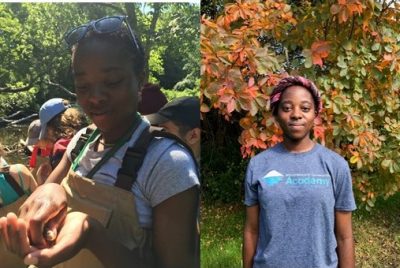
 

“In my high school years, I would always search for fun, educational activities to participate in over the summer; NRCA was one of them,” says Kenechi, pictured during the field experience in 2016 (left), and today (right).


Read more about Kenechi’s experiences with the NRCA below:

Why were you interested in participating in the NRCA?

Kenechi: I was interested in participating in the NRCA because it sounded like a summer activity that I would enjoy. I always enjoyed science from a young age and continued to even up until now. Often in my high school years I would always search for fun educational activities to participate in over the summer; the NRCA was one of them- one I have mentally noted as one of the best experiences in nature I have ever had! And I would highly recommend it to anyone who is looking for something to do over the summer, it is truly life changing.


What did you do for your conservation project and who was your community partner?

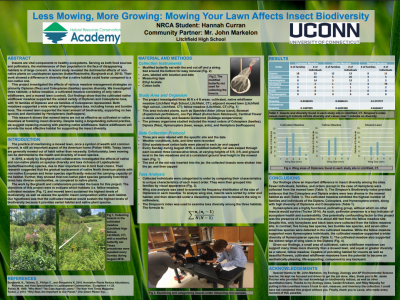
Kenechi: For the conservation project my community partner, Daniel P. Kloster, and I created a criteria table that would help to analyze what method of food waste conservation would best suit a particular structure. I chose my high school. Methods such as composting, Anaerobic Digestion, Aerobic Digestion and Biofuel processing were each evaluated as potential conservation methods that a given structure might utilize depending on their resources and/or their proximity to them.


What was the most memorable part of the NRCA, and why?

Kenechi: The most memorable part of the NRCA was when our group was to assemble into teams and each of us had to run through the forest in the evening to find all the ingredients for our s’mores desert using a compass and flashlights. While educational it was also extremely fun! I won’t forget how eager the teams were to get out of the forest.


Which aspect of your NRCA experience or project are you most proud of, and why?

Kenechi: The aspect of my NRCA project that I am most proud of was being able to focus on the issue of food waste, which I had been quite adamant about in previous projects in high school but was an issue I never fully tackled. Through the NRCA community project, my mentor and I were able to create a feasible solution to the food waste and I was not only able to present the solution but also to raise awareness about the correlation between food waste and world hunger.


Why did you choose to study your major at UConn?

Kenechi: I chose to study my major (HDFS-Human Development and Family Studies) because of my sheer enjoyment of working with children. While previously an intended Environmental Engineering major(not yet enrolled in the program), I switched because I struggled tremendously in it. Though its title sounded like something I was interested in pursuing, the courses that it encompassed were not and I often found myself focused on, wondering about, and dreaming of pursuing something else more than I envisioned being an Environmental Engineer. Right now as an HDFS major I enjoy my classes and walk happily in preparation for the future of Early Childhood Education that I am pursuing. I chose to study at UCONN because of the resources and support that it gave my previous intended major (Environmental Engineering) as well as its support for a wide range of other majors. Even though my current major doesn’t have a natural or environmental focus, I’ve learned that a major doesn’t say everything about a person, its only one aspect of your purpose and interests in life. It is often that when we continue to pursue the things that interest us, though outside our degrees, we create a unique footprint in our future jobs that become tailor made for us to fit into and encompass our interests. Yes, I am an HDFS major, but I am also apart of a worship team, enjoy learning languages and work with the Natural Resources and Conservation Academy. Who knows where your specializations can take you?!


What advice would you give to a student considering applying to an NRCA program?

I would say “Apply!” If you’re considering it, you’re probably wondering if you can do it, and the only way you’ll know if you can do it is if you apply and see. I will honestly tell you that attending the NRCA program maybe that once in a life time experience that you won’t forget. So, go for it! You will be introduced to a whole new world that you may never have realized was literally in your own backyard! You will also have one of the best opportunities to get your hands dirty and make friends all throughout.


If you could describe your NRCA experience in 3 words, what would they be?

Fantastic!      Adventurous!      Wet!


Take a look at Kenechi’s independent community project, linked below:
 

Thank you, Kenechi, for contributing a blog! If you have participated in an NRCA program and would like to contribute a blog about your experience, email us at nrca@uconn.edu. 
Meet NRCA Alumnus and UConn Undergraduate Ricky Moore

October 17, 2018

We decided to catch up with alumni after they completed their NRCA programs to see what they are up to now. Today, we are chatting with Ricky Moore (NRCA class of 2014), who is a sophomore studying Natural Resources, with a concentration in Fisheries and Wildlife, at UConn.


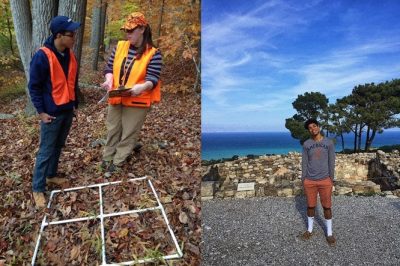
(Left) Ricky works on his independent community project in 2014, which he presented at the Connecticut Conference on Natural Resources in March, 2015. (Right) Ricky on a UConn Study Abroad experience in Greece in January, 2018.


Read more about Ricky’s experiences with the NRCA below:

Why were you interested in participating in the NRCA?

Ricky: I was interested in participating in the Natural Resources Conservation Academy because I have always had a passion for all things involving natural resources and the environment, since before I could remember. I grew up going to upstate Vermont at least 4 times a year. My great aunt and uncle had a cabin on 35 acres with 3 ponds, a greenhouse, and a lot of hiking trails. I used to go out a lot just on walks to explore countryside and was always, so intrigued by the foliage and wildlife. I used to go out on a lot of hunts with my uncles, however we never really caught anything, which is probably because I blabbered the entire time. We used to always go fishing too and I would always end up with some type of fish on my hook, however getting on dry land was always the real issue. My most memorable fishing trip was a cold, rainy day when my uncle took me out to the farthest pond on the property to catch the legendary Sharky, the biggest trout in the pond. We were out for 3 hours that day and I managed to hook him, but he ended up breaking the line because he was so big. So, with all this said you can see how Vermont is my biggest drive for my love for the environment. It’s what brought me to join my vocational agriculture program at my high school and put my curriculum focus on Natural Resources. It’s here where I met Laura Cisneros, the program coordinator, and where she introduced me to the program. When I saw how I could further my passion through the program there was no question in mind that I was going to join.


What did you do for your conservation project and who was your community partner?

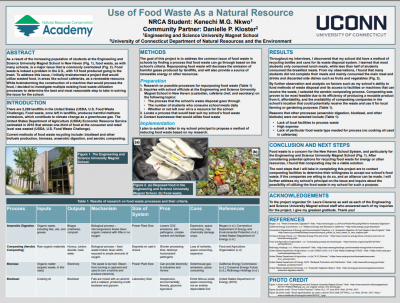
Ricky: The purpose of my project was to inform the community on how management of invasive species is beneficial to maintain a healthy ecosystem. The project documented the distribution of native and invasive plant species within a 50-acre parcel of Cockaponset State Forest in Middletown, Connecticut in order to see what species were predominant in an area that had/ had not been managed. We mapped out patches of the invasive plant species using ArcGIS to provide baseline survey data of the property for the Department of Energy and Environmental Protection (DEEP) to further plan invasive plant management practices, while understanding if prior management practices (mowing and planting native species) were successful. The study was attempted to be furthered by live trapping small mammals to get an inventory their community and better understand how they may be affecting seed dispersal. My community partner was DEEP Wildlife Biologist, Ann Kilpatrick, who provided her knowledge and resources that made the project possible. DEEP Wildlife Resource Assistant, Jessica Bristol, also dedicated a lot of time and effort in assisting me in the project just.


 What was the most memorable part of the NRCA, and why?

Ricky: The most memorable part of NRCA had to be when I went sanding for fish in the Fenton River with Dr. Jason Vokoun. This was so intriguing to me because I would later perform this fishing technique at my job at Marine Bait Wholesale. In the setting, we were placed in at NRCA, we went along the Fenton River sanding for the vast array of fish species in the river and caught a wide variety, including sucker fish, a lot of trout and some bass. I especially was fascinated by the electrofishing they did because I thought it was really cool when the fish floated to the top presumably dead, however when you put them in the bucket they were completely unharmed and were full of life. I loved doing the measurements on the fish and identifying the types of species in the ecosystem. When I performed the sanding for killifish at Marine Bait Wholesale for the first time, my boss was so shocked at how much I knew about the technique. This really helped him out due to the environment we were in and really made his job easier because he didn’t have to worry about me.


Which aspect of your NRCA experience or project are you most proud of, and why?

Ricky: The aspect of my NRCA experience that I am most proud of is the relationships I made while I was there. I made lifelong friends while I was in the program and some of the participants I still talk to this day. It’s just such a bonding experience being at a university with the same people for a whole week being involved in an area of study that you all are so passionate about. Also, the professor and faculty I met while I was in the program, I am still in contact with today. If it wasn’t for the program I probably wouldn’t have my current job in the Natural Resources and the Environment office as student administrative assistant running the department social media accounts.


Why did you choose to study your major at UConn?

Ricky: I chose to study my major because I want to protect the environment that we rely so heavily on. There are a lot of problems going on in the world involving habitat loss, pollution, species endangerment and I want to make a difference in fixing some of these problems. I came into the university as a Natural Resources major, but now I have a focus in environmental engineering and I would like to make a difference in the regulation aspect of it. I want to solve problems and advice companies/government agencies on ways they can have as little environmental impact in their practices, while creating new and innovative ways to protect the environment.


What advice would you give to a student considering applying to an NRCA program?

Ricky: I would advise any student that is on the fence about joining NRCA to just do it, no matter what. I mean even though I always knew I was interested in all topics related to natural resources and the environment, I also met people that weren’t even sure if they liked it. When going to NRCA they got a whole different perspective on what the field entailed and genuinely enjoyed all aspects of the program. Also, it’s not just the learning aspect of the program, the friends you make while being there is another very important aspect of the program. You make so many friends that will probably end up being there your whole life. NRCA was such an important chapter in my life and I wouldn’t change it for anything. I’m so happy I got the opportunity to be involved and am extremely grateful to the faculty and staff that dedicated their time to ensure the program’s success!


If you could describe your NRCA experience in 3 words, what would they be?

Ricky: NRCA Ninjas Bloopers


Take a look at Ricky’s independent community project, linked below:


Thank you, Ricky, for contributing a blog! If you have participated in an NRCA program and would like to contribute a blog about your experience, email us at nrca@uconn.edu. 
Meet NRCA Alumna and UConn Undergraduate Hannah Curran

October 10, 2018

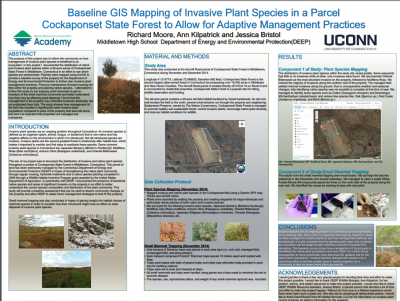
We decided to catch up with alumni after they completed their NRCA programs to see what they are up to now. Today, we are chatting with Hannah Curran (NRCA class of 2016), who is a sophomore studying Environmental Science at UConn.


(Left) Hannah presents her independent community project at the Connecticut Conference on Natural Resources in March, 2017. (Right) Hannah and her mom enjoying one of their favorite activities, hiking, in November, 2017!


Read more about Hannah’s experiences with the NRCA below:

Why were you interested in participating in the NRCA?

Hannah: I was interested in NRCA for a few reasons. First, a student in my high school participated the year before me, and after hearing his positive experience, I pursued the program. Also, I have always been very interested in and concerned for the environment. I wanted experience outside the classroom, since my high school did not usually provide those kinds of learning environments. My AP Environmental Science teacher, after seeing my interest in his class and knowing about the program, encouraged me to pursue it.


What did you do for your conservation project and who was your community partner?

Hannah: My community partner was again my AP Environmental Science teacher, who propagated a native wildflower meadow himself behind the high school, reclaiming mowed lawn. For my conservation project, I assessed the biodiversity in the native wildflower meadow, a mowed lawn adjacent to the meadow, and a fallow meadow down the road. We investigated if species richness and abundance of plants corresponded to the species richness and abundance of the insects in the same area.


What was the most memorable part of the NRCA, and why?

Hannah: The most memorable part of the NRCA was working on the community project. My teacher and I were able to pull in students to get them involved. Not only was the experience enriching my educational career, but others’ as well. My AP Environmental Science class helped collect insects in the native meadow for one class, as my own experiment doubled as lab experience for them. Additionally, my Zoology & Evolutionary Biology class assisted in identifying and counting the insects. The students received hands-on experience with the scientific method while learning the importance of conservation biology. I also received the help from two girls who were sophomores at the time, and I remember that they were incredibly interested in the process of experimentation and data collection. It was the first time I was able to see the impact that one project had in bringing people together over a common task. It was a powerful moment, to realize you can teach others while improving your community.


Which aspect of your NRCA experience or project are you most proud of, and why?

Hannah: I am most proud of the experiment and data collection that I accomplished during the field experience. My teacher and I set out with big goals – to collect and identify the insects to family. However, we quickly realized that, even for a professional, this was no easy task. Cutting back the level to which I identified the insects was disappointing at first. I thought that my results would be compromised, and it was not what we originally set out to do. However, collecting and identifying the insects was incredibly tedious, time-consuming, and difficult even after we scaled back. It took hours of careful examination and sorting (and we completed the whole process twice). Completing the identification was definitely the hardest, but most rewarding, part of my NRCA experience.


Why did you choose to study your major at UConn?

Hannah: I chose an environmental science major at UConn because it is somewhat like an umbrella. There are many specific topics to specialize in beneath the field of environmental science. However, the earth system is not an isolated place. All factors – social, economic, physical – are interacting all the time, everywhere. I wanted to major in a field that would allow me to see the entirety of the environment and all the outlying fields that interact with it. Being an environmental science major allows me to take classes such as Agriculture and Resource Economics and literature courses, all of which influence our interactions with the environment in some way. Environmental science is a field that should be approached from many subjects and perspectives to solve our problems, and through this major I am allowed to do that.


What advice would you give to a student considering applying to an NRCA program?

Hannah: Apply! There is never harm in trying. The only harm that comes is from not trying. Going into the NRCA program, I didn’t know much about any of the topics we would be learning about, and I didn’t know if I wanted to pursue environmental science. NRCA allows you to experience these fields before you have to decide whether or not you might pursue further education in them. It is great if you find a field you like, but I think it is even more beneficial to find a topic you don’t. It only brings your closer to finding the subject you are truly passionate about, whether it be water, soil, or GIS. Personally, during NRCA, I learned my passion lies in wildlife and biodiversity!


If you could describe your NRCA experience in 3 words, what would they be?

Hannah: My three words to describe my NRCA experience would be “Saving the world!”


Take a look at Hannah’s independent community project, linked below:


Thank you, Hannah, for contributing a blog! If you have participated in an NRCA program and would like to contribute a blog about your experience, email us at nrca@uconn.edu. 
That Sound You Hear is the Hatching of Conservation Projects!

July 18, 2017

Written by Chet Arnold

Last week saw the successful launch of the Conservation Training Partnership program, the goal of which is to develop and carry out local conservation projects around the state powered by teams of high school students and community volunteers. The CTP is an outgrowth of the Natural Resources Conservation Academy, the week-long program for high school students that is in its 5th year (and taking place this week!). That program has been so successful that — with a big boost from the National Science Foundation — CLEAR, the Department of Natural Resources and the Environment, and the Center for Environmental Sciences and Engineering were able to create the CTP.

Like the NRCA Mother Ship (actually called the NRCA Conservation Ambassador Program), the CTP has twin goals of educating the participants about natural resource protection, and catalyzing on-the-ground conservation projects in communities across the state. However, CTP workshops are only two days and include both students and their community partners, joined together into teams. Last week’s workshops were held in Storrs and New Haven, but participants came from all over the state. Faced with a two-day barrage from the teaching faculty on natural resource topics and geospatial tools training, the teams bravely took it all in and came up with great ideas for projects, from bear awareness to invasive species mapping. Congrats to the CTP graduates!  Much more to come as their projects progress!